
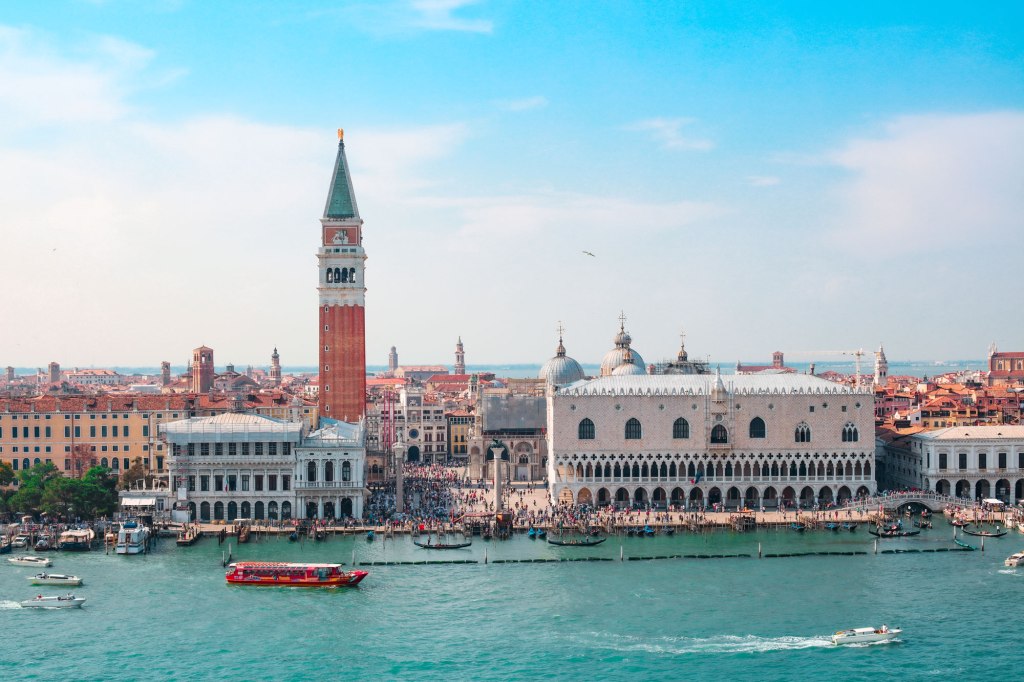
Venice is a city of wonder, and honestly, pictures, movies, and videos do not accurately portray the beauty that makes the city special. While my wife loves Rome, Venice has her heart. All cities have things that make them different, but Venice takes that to a completely different level. There are a few cities that have a similar structure, Amsterdam comes to mind, but Venice is unique. Venice has a lot of different nicknames: “The City of Water”, “City of Masks”, “Queen of the Adriatic”, “City of Bridges”, “The Floating City”, and the list goes on. But most of those affectionate names derive from the city’s canal system and history with water. You will unmistakably sense it the moment you set foot in the city, if you didn’t know already.
Venice is a picturesque city, brimming with excitement and hidden gems in its narrow streets and alleys. It’s a place like no other, where you can discover museums, palaces, and historic town squares at every turn. Most people try to avoid getting lost; however, believe it or not, it can actually be enjoyable to roam aimlessly through the historic, slim streets.
As you can imagine, a city this amazing is popular. Some might even argue too popular for its own good. The city even started a ‘tourist tax’ during the summer season because the volume of tourists just keeps increasing. People want to see the wonderful city for themselves, and if you haven’t, you likely want to as well. There is no getting around crowds of tourists while visiting Venice, especially during the summer, but you might find slightly smaller crowds during the winter months. My best advice, avoid June, July, and August. There will still be lines, overpriced accommodations/food, and crowds of people, but believe me, the summertime is far worse.
Similar to Rome, Venice has multiple options when it comes to its tourist cards. I highly suggest investing in one of them, but honestly, the best one for you will depend on what you plan on doing during your trip. The Venezia Unica Card, the Venice City Pass, the Venice Museum Pass, and the Venice Pass are the four main options to choose from. Generally speaking, they are all going to do similar things. Pre-purchased tickets for certain museums, entrance into the Doge’s Palace, and shorter lines. This can potentially save you a lot of money and is a straightforward process. Some passes need to be picked up in person in Venice, and others are sent directly to your email account. It is important to understand this as you make your decision.
Venice takes some planning to figure out how to arrive in the historical center. Venice consists of over 100 islands, separated from the mainland by open water and connected via bridges and canals. Because of this, access to the city is somewhat limited. The city’s official airport is the Venice Marco Polo (Aeroporto di Venezia Marco Polo VCE). From the airport, you will have to take either public transport or a form of private vehicle. Be mindful that Venice does not have roads in the sense you are used to having in other cities. Essentially, the city is car-free. Because of this, you will not be dropped off in front of your accommodations. So expect to walk. There are water buses (Vaporetto) that are stationed throughout the city and make regular stops at various locations. This is the best way to navigate the city. There are also private water taxis if you are willing to pay the extra price. Just know you will be carrying your luggage around. And since most people overpack, this can become a struggle walking the cobblestone roads and going up and down bridges and stairs (Which are unavoidable). You may also be arriving in Venice via train or cruise. Either way, the above advice is still relevant. However, I will say that arriving from Stazione di Venezia Santa Lucia (Which is the main train station) was a far more pleasant experience.
Top Things to See and Do


1. Enter Doge’s Palace
One of the most significant attractions in Venice, the Doge’s Palace, is located in the heart of St. Mark’s Square. The Doge’s Palace, also referred to as Palazzo Ducale, was the former home of the Doge, the ruler of Venice. This grand Gothic-style palace was once the seat of political power, but now it has been converted into a museum where visitors can wander through the Doge’s lavish rooms. There is a combined museum ticket you can purchase that allows you access to a few other museums in Venice. Throughout the years, the palace has undergone renovations, expansions, and modifications. Inside, you’ll be captivated by the exquisite artwork, ornate gilded ceilings, and a remarkable armory. Another interesting structure to be on the lookout for is the Bridge of Sighs. If you explore the prisons, then you will likely cross the bridge from the inside. It was built in the early 1600s to link the palace to the new prison. The name referred to the sighs of the prisoners who, going from the courtroom to their cell, got one last look at freedom as they looked upon Venice. You can snap a picture of the bridge from the outside if you go around the side of the palace. It can be easy to overlook, but you will likely see a group of tourists doing the same thing.
2. Stroll Piazza San Marco
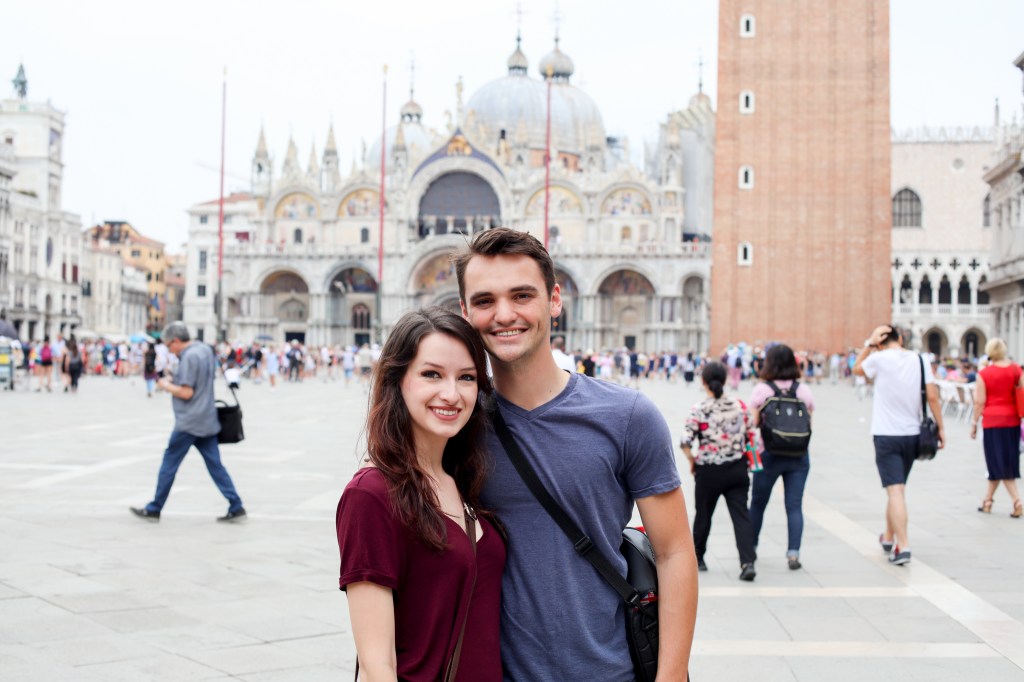
When most people imagine Venice, they likely think of a gondola ride down a canal or St. Mark’s Square. Although I personally would not recommend a gondola ride, visiting St. Mark’s Square is essential for any trip to Venice. The square itself is absolutely beautiful, and it can be fun walking around the area, listening to the music from the restaurants, and just taking it all in. But of course, there is more to this area than the 12th-century main square. The main attraction, the Basilica di San Marco, is truly a sight to behold, with its majestic domes and intricate decorations that will leave you in awe. Dedicated to the city’s patron saint, it is located in the Piazza San Marco. The current basilica was built in 1063. Inside, you’ll find breathtaking 11th-century mosaics, marble walls, statues, and five Byzantine domes covered in gold. It is believed that the High Altar houses some of St. Mark’s remains. Within the square, and across from the basilica, you will see a very large tower called the Campanile di San Marco. The 16th-century brick tower offers a panoramic view from the top that’s simply amazing, especially when the sky is clear or the sun is setting. Finally, often overlooked, the Torre dell’Orologio (Clock tower) dates back to the 15th century and is a great example of early Renaissance architecture.

3. Get Lost
This suggestion might come as a surprise to some readers, but wandering through the tight streets and canals of Venice offers a different perspective on the city. You can escape the crowds, save some money, and see what authentic Venice looks like away from the tourist attractions. You’ll likely discover shops, restaurants, countless bridges, and the architectural charm that makes Venice what it is as a city. I cannot stress enough how much I would recommend carving out time to simply walk. This is even more enjoyable when you pop into random restaurants and markets for Venetian and Italian snacks like gelato from SuSo, buranelli cookies, or cicchetti from Osteria Da Baco. Discovering the bookstore, Libreria Acqua Alta, and following winding streets that abruptly end were some of the highlights of our exploration. Plus, you will find so many photographable things as you stroll the cobblestone alleys and streets. To make this even more special, plan to do it early in the morning or later in the evening.
4. The Grand Canal and Rialto
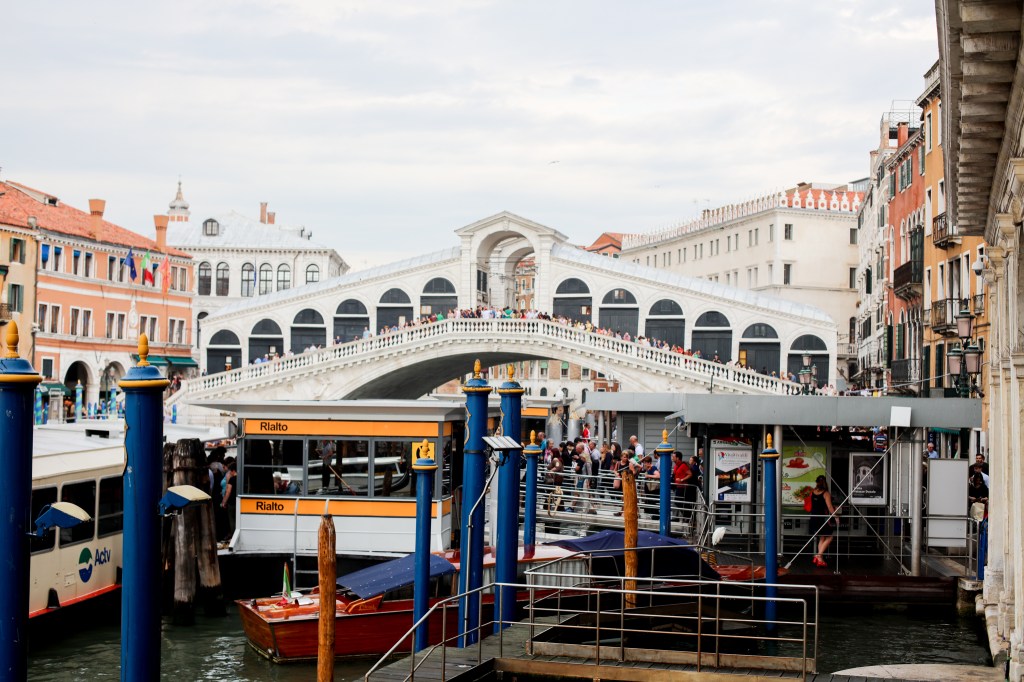
If you are visiting Venice, then you will at some point find yourself on the Grand Canal. Both a water taxi and a waterbus provide a great opportunity to see the city and take some amazing pictures. Honestly, we went the entire loop around on a waterbus (Initially by mistake), and we were able to see so much of the city from a very comfortable seat. Along the Grand Canal, you will see the infamous Rialto Bridge. It is the oldest of the four bridges that go across the Grand Canal. It was first built with wood in 1181, but then rebuilt with marble and completed in 1591. If you cross the bridge on foot, you will be flooded with jewelry shops and tourists, but it is a cool experience to do at least once. More interesting, however, is the Rialto Market. Make it a goal to arrive early in the morning if this is something you are interested in doing. You will be engulfed with the smell of fresh fish, but you will get to see the locals putting their fruits out to sell and feel a nice calming sense as you stroll along the canal. We ended up spending a few euros on fresh cherries and grapes for a morning snack.

5. Island Hop
You will likely spend most of your time on the main island, that is, Venice, but there are some popular islands nearby to escape the large crowds. Murano Island is well known for its glass-blowing craft and has been producing exquisite glassworks in this area for over seven centuries, starting from 1291. Another island, Burano, is home to very colorful buildings, which can create some unique and beautiful photos. Imagine houses covered in bright pinks, royal blues, pastel greens, and many more. Of course, directly across the water from St. Mark’s Square, the small island of San Giorgio Maggiore is one of the easiest islands to reach. On the island, you will find a beautiful church that shares its name with the island. There is also a bell tower that offers some great views of the city with a far smaller crowd.
6. Attend Festivals and Celebrations
Venice is renowned for its world-class festivals. The Carnival, held in late winter, is likely the most well-known and draws an enormous crowd every year. This is not something I have personally attended, but it is something else that makes Venice even more unique. Carnival is a vibrant celebration that takes place over ten days every February, leading up to Mardi Gras, which is the day before the start of Lent on Ash Wednesday. This tradition has been around for centuries, originating in the 12th century and gaining immense popularity in the 18th century. The festival is known for its iconic and diverse masks, which play a central role in the festivities. Another very popular festival is the Venice Film Festival. It is one of the most well-known film festivals in the world and the oldest. It is also recognized as one of the top five international film festivals worldwide. The festival takes place on the island of Lido in the Venice Lagoon, either in late August or early September. Throughout the festival, Venice comes alive with a plethora of events and parties. If these are something you want to plan a trip to Venice around, then it is advisable to book your accommodation well in advance, as the city gets filled up months before the events.
7. Learn about the Jewish Ghetto
If you travel to Europe enough, you will find that many major European cities have a Jewish Ghetto of some form or another. We don’t always get a chance to visit the neighborhoods, but it is something my wife and I try to include in our trips. Established in the early 1500s, the Venetian Jewish Ghetto is regarded as the world’s first ghetto. For a long time, the Jewish community in the city was restricted to living in this portion of town. They were permitted to leave during the day but were confined and closely monitored at night. The Jewish Ghetto is now bustling with restaurants, shops, museums, and synagogues. It’s a vibrant area to discover. You will likely find fewer tourists here and a more authentic Venetian feel since it is nearly a 30-minute walk from St. Mark’s Square.
The Good: The canal system and the way the streets and buildings all vibe together are what make this city so interesting.
The Bad: Because the city is on an island, arriving in Venice can be difficult and more time-consuming than in other Italian cities.
The Ugly: Prices are higher in Venice compared to the rest of the country. Also, the beautiful canal system smells and will take some time to get used to during your stay. And of course, the sea of tourists can take away from the experience.
Venice truly is a picturesque city that offers a unique atmosphere. The Italian culture you will experience in Venice is different from that in other cities like Rome or Naples. So if you want to explore different cities within Italy, Venice is essential. And in my opinion, the best way to really expose yourself to the ambiance is simply walking the narrow streets and crossing the many canals that make Venice special.
 The Traveling Tourists
Leave a comment